Showing posts with label fantasy. Show all posts

Friday, April 24, 2015

MIXED BAG. PRESENTS LOOT CRATE APRIL 2015: "FANTASY" REVIEW!

MIXED BAG. PRESENTS
LOOT CRATE APRIL 2015
"FANTASY" REVIEW: "AS YOU WISH."

A little earlier this time around but hey, like a good wizard, Loot Crates are never late nor early, they arrive precisely when they mean to.

And it has been a big month:

  • Easter saw an unexpected reunion between our family and my uncles (who I hadn't seen in a few years) who came with my Grandpa.
  • I finally got my King Dedede Amiibo and a lot of Star Wars figures, a couple books, and a special item I'll feature tomorrow.
  • I beat Super Mario Bros. 3 (finally) and started working on Far Cry 4, watching The Arrow, and played more Vampire the Masquerade.
  • I watched Birdman (or The Unexpected Virtue of Ignorance). Watch it.
  • I finally got my driver's license!
2015 has been pretty interesting, so far.

Now, let's talk about Loot Crate:

Loot Crate is a subscription based service where members pay a fee (based on their subscription plan) to receive a themed mystery box every month in the mail (last month's theme, pictured above, was "Villains") filled with nerdy products from companies like Nintendo, DC, Marvel, Capcom and much more. The contents of the box usually contain things like exclusive figures, a t-shirt, a magnet, pin/s, posters, comics, books, toys, and pretty much everything you can think of from "dragon-flavored" Jerky in April's "Dragon" Loot Crate to Deadpool socks (pictured above).

This is the perfect surprise for self-professed nerds that love cool stuff and weird stuff alike.

If you're lucky, you might even be the lucky member to get the monthly Mega Crate which always has a value of $750 or more!

And so, for as low as $11.67 + $6 SH, you can become a Looter too! Plus, if you use any of the various codes you can find online, you can get discounts. 

This is my eighth Loot Crate review. If you wanna check out last month's review for MARCH 2015 "Covert" Loot Crate, check out the link HERE.

 This month's Loot Crate has a theme of "Fantasy" and so, if you know anything about me, my expectations were high and, with the promise of Dungeons and Dragons, Game of Thrones, Harry Potter and Princess Bride items (and a T-Shirt), I couldn't wait to open my box!

Monday, April 13, 2015

MUSIC MON! GAME OF THRONES SEASON 5 IS HERE!


I still haven't watched the new episode(s) of Game of Thrones Season 5. But I am so stoked for Season 5!

I don't have much more to say. Well, I got a little anecdote: I associate Game of Thrones with cutting grass. I can't help but think about Game of Thrones while I cut grass. Why?

It airs during prime grass cutting months, I usually watch it off my DVR on my day off (Monday), and then I go cut grass. So, I will always associate lawnmowers and Peter Dinklage. The human mind is a mystery.

But Game of Thrones is awesome.

Saturday, February 28, 2015

WORD OF THE DAY! 2/28/14! (ALIGNMENTS PT. 2 NEUTRAL GOOD)


neutral good [noo-truhl-good]
noun
1. The alignment that does the best that a good person can do. This alignment works for the greater good by striving for a prosperous and happy life the community. They uphold the values of pragmatism, balance and compassion, while looking for a balance between freedom and order that will promote the best outcome for all.
adjective
2. Anything that falls within the perimeter of the neutral good alignment (see 1. above).


"Serving kings and magistrates but not being beholden to them" describes Gandalf the Grey (and "The White" for that matter), in all but name, when it was used as a descriptor of Neutral Good in the 3rd Edition Player's Handbook. He puts the greater good, in his case the defeat of Sauron and the welfare of Middle Earth, above any selfish desires and often against the authority of man and elf alike, and is one of the most beloved and quoted mentors in fantasy (the fantasy equivalent of Obi-Wan and Yoda).

Fair warning: Neutral Good is my alignment and I think it is the best alignment (if there is such a thing). So, expect me to have some bias but, hey, as the goody good balanced alignment, I'll try my best to be fair.

Switching gears for a moment to Star Trek, let's talk about the legendary trio of Kirk, Spock, and Mcoy.

In Freudian theory, the psyche is made up of three components: the ego, the superego, and the id, which represent the struggle between emotions and logic when it comes to making decisions. The id represents the emotional and instinctual desires, the superego represents reason and obedience to social norms, and the ego represents the conscious self that seeks to strike a balance between the other two components.

In Star Trek, Kirk (Neutral Good) is the Ego, while Spock is the Super Ego (Lawful Good) and Mcoy represents the Id (Chaotic Good) in a positive Freudian trio. Kirk is the more balanced of three, and is the natural leader (as well as the official one as the Captain), and weighs the advice of his two comrades in order to make command decisions that, ultimately, most often leads to the best outcome for all parties involved in the, mostly, enlightened future of Star Trek and the Federation. The downside of this role is that the heavy weight that making such decisions, many of which are life or death decisions for countless sentient beings, takes its toll on Kirk. But between his love of his career and the his sense of obligation to do good, Kirk persevered and became the most legendary and long-serving captains in Federation history, despite multiple attempts to retire him or promote him by the Federation.

These are also the strengths and weaknesses of the Neutral Good character in general-- they are pragmatic benefactors but, in having less ethical bias, their actions are dictated by personal choice and therefore the outcome, for better or worse, often weighs more heavily and more personally than good characters able to hoist the decision-making on the authority they obey or to abandon the decision altogether if it restricts them too much.

It isn't easy being a do-gooder. And arguably neutral good is the most do-good alignment.

"I would unite with anybody to do right and with nobody to do wrong." -Frederick Douglass


Also, more so than any other alignment, Neutral Good or "True Good" is the alignment that works for the greater good.

Neutral Good characters are not bound to a particular ethical bias but instead are bound to doing the most good; a neutral good character tries to do the most good for the most peoples in the right places at the right time in the right way by being flexible and pragmatic. They are not beholden to any higher authority or selfish agendas, but instead are beholden to the lives and freedoms of other people first.

Neutral good societies strive for a balance between harmony and freedom; they try to create a society where law and order exist to protect and promote the public welfare, as well as trying to allow for personal freedom of individuals, while creating a society that is vigilant of the abuses of authority over individuals and individuals against each other. Neutral good societies promote those that serve the people through professional and personal action.

Neutral good societies tend to be smaller since it is difficult to create balance in a larger society. Furthermore, due to their altruistic natures, neutral good characters are generally welcome in any sensible society, since they serve as natural problem solvers that are willing to compromise for the greater good (hence the nickname "mercenary good") and try to pick their battles wisely, since they know they can't fix every problem, and are less likely to butt heads with the local authorities.

A neutral good character must strike a balance to achieve the best results: they believe people should behave altruistically and attempt to meet the needs of their society and the individuals that make up their society. They are willing to ignore laws and curb freedoms that they believe are harmful to the greater good.

The greatest source of conflict for these characters is maintaining a balance that promotes the greater good and making decisions that promote the greater good. Choice is the neutral good character's greatest strength and greatest burden.

An example of a morality-ethics based conflict for a Neutral Good character is difficult to explain because of the Neutral Good character's flexibility. While the solution is often obvious or somewhat more straightforward for a LG or CG character, Neutral Good characters make their decisions based on the greater consequences of their actions. This doesn't mean they are likely to commit evil acts, but it does mean that they are less likely to take any decision lightly. Every mistake is their own-- they cannot fall back on following the law or following their heart, but instead must follow their head. Furthermore, their are neutral good characters that tend towards lawful solutions and some that tend towards chaotic solutions. But let's try an example from Gandalf's book:

A local king is over-taxing the citizens of a small town but he is using the funds to build a new fort. A Chaotic Good character would be opposed to the king's actions for his over-taxation and a Lawful Good character would probably be offended but might not necessarily oppose the king. A Neutral Good character would only wonder whether the king's actions were necessary for the greater good and try to find a solution that balances the welfare of the small town against the welfare that would come from building this new fort. If the new fort would stand in the way of a greater evil than taxation, he might overlook it but would probably search for an alternate solution that satisfied all parties to the best of his abilities. That is the struggle of NG heroes.

What are some examples of Neutral Good characters? Gandalf (of course), Harry Potter (and maybe Dumbledore), Spider-Man, Captain James T. Kirk, Goku, Wonder Woman, and Luke Skywalker.

So, why pick Neutral Good? Simple. You want to solve problems for the greater good by being proactive and pragmatic

Basically, you want to be a good person first.

Thursday, February 12, 2015

WORD OF THE DAY! 2/12/14! (ALIGNMENTS PT. 1 LAWFUL GOOD)


lawful good [law-fuhl-gud]
noun
1. The alignment that upholds society and society's laws in the name of the greater good and prosperity for all. This alignment upholds the values of truth, justice and compassion, while striving to bring structure and security.
adjective
2. Anything that falls within the perimeter of the lawful good alignment (see 1. above).

EX. Holy crap! I am opening up a big can of worms by doing a word of the day about an alignment without explaining the other alignments but, if you have to start anywhere, I suppose Lawful Good is a good place to start.

Real life morality and ethics is complicated. So complicated that it has led many a philosopher to question the definition or validity of these terms in relationship to real humans. After all, real humans are far more enigmatic than most fictional characters because, hypothetically, we can know exactly how they feel and think about everything. In reality, one only knows one true self or that only one could possibly know one true self. Still, we categorize the way that individuals and organizations act based on what they espouse through their words and actions. In fiction, we can have debates about where characters fall upon the spectrum of good versus evil and chaos versus order.

Dungeons and Dragons uses these principles for the alignment system.

The purpose of the alignment system, at least in my opinion, is to give a guideline for players or DM in understanding character's ethics and morality to better translate them to roleplaying through the character's actions and motivations. Therefore, every character in Dungeons and Dragons is defined by their alignment. Their alignment is define along two crossing axis:

The morality axis (Good vs. Evil) and the ethical axis (Order vs. Chaos).

Good is most simply defined by altruism and the respect of other living beings and evil is by lack of altruism and a lack of respect for other living beings. Law is defined by a focus on honor and respect for society's rules and chaos is defined by a focus on individual freedom and expression. Neutrality defines the middle ground between these two extremes with true neutral having neither defined morals or ethics.

Today we're talking about the strict but idealistic alignment, Lawful Good or "the Paladin alignment" (despite the fact that a paladin can be any alignment but tend toward lawful alignments).


What's a paladin?

That's a paladin. In the literal sense.

A paladin is a holy knight that crusades in the name of good and order while wielding divine magic and martial discipline. In the dungeons and dragons sense.

A paladin, in a less literal sense or even Dungeons and Dragons sense, are righteous heroes who sacrifice their own comfort & safety to protect and promote the greater good. They can also be called "paragons".

Paladins and paragons are heroes. And (usually) they are lawful good. Because, arguably, lawful good is the most heroic alignment.

Lawful good characters strike a balance between law and good; good dictates their altruistic morality and motivates them to put others before themselves and law dictates their means to altruism through creating and/or upholding systems that promote the greater good.

Lawful good societies are built upon laws that protect and promote the populous. They build institutions to uphold the law and build further institutions to protect these institutions. The promote those that serve these institutions.

A lawful good character must strike a balance between justice and mercy and a lawful good society must strike a balance between placing importance on structures and rules creates to protect the people and the freedom of peoples these structures and rules are designed to protect.

An example of a morality-ethics based conflict for a lawful good character would be catching a hungry street urchin stealing an apple from a vendor. Law would dictate that they hand the urchin over to the authorities. Compassion would dictate a more merciful path, especially if the law is harsh on thieves, considering the specifics of the situation. After all, not all crimes are equal. A starving child stealing an apple cannot be compared to a thug robbing a carriage. As a lawful good society, it would be important to try and solve the problem on a macro scale by making sure punishments fit the crime while also seeking to create institutions that promote welfare and opportunities for the poor/downtrodden while also seeking to protect the innocent from suffering in the future.


What are some examples of lawful good characters?

Aragorn, Superman, Spock, Captain America, Robocop, Carrot Ironfounderson, Optimus Prime

So, why pick Lawful Good? You want to play a character that upholds the law, protects the weak, and serves as a paragon in his society.

And, if you don't know just how controversial alignments can be (trust me when I saw someone will take umbrage with my definitions), try to see if you agree with all of the characters in the following image. I don't. But I do agree with most of it. And that'll do!

Friday, January 30, 2015

WORD OF THE DAY! 1/30/15!


flumph [flumf]
noun
1. Dungeons and Dragons. First published in the 1st Edition Dungeons and Dragons book, The Fiend Folio, it is a Lawful Good aberration, from space/outer planes, resembling a glowing jellyfish with eye stalks that floats using air jets that make the noise that gives them their name. Surprisingly intelligent and wise, they live in well-organized and harmonious communities and communicate telepathically with other life forms. They, harmlessly, feed off the emotional energy of other beings and react to their emotions/behavior accordingly; they are attracted to good creatures and repelled by evil. Flumphs are quick to make friends with those that can look past their appearance and, generally, serve heroes in the fight against heroes by warning them of alien threats and assisting them in their own way.

EX. Out of all of the extremely silly monsters in Dungeons and Dragons history, the humble flumphs are my favorite.

The angle of appeal with these alien creatures is they look like some sort of random alien creatures that would swarm heroes and take part in something out of a bad Japanese hentai but, instead, are some of the nicest and most helpful creatures you will ever meet! These mini Flying Spaghetti monsters are like the pugs of D & D-- ugly, adorable and a little bit tragic. After all, most heroes would just assume they're horrible monsters and cut them down without giving them the opportunity to explain themselves. And that's a shame because, unlike many outer beings, Flumphs are not complete and utter tosspots.

My adventuring party in the Fifth Edition game I am currently playing in, as my human cleric of Lathander, Geth Dawnbraker, we met a Flumph! The pitiful creature seemed a little young, a little lost, and very distraught. It couldn't fly or, rather, it was afraid to fly! Immediately taking the little creature under his wing, Geth Dawnbreaker gave him an encouraging speech and, with a little divine intervention, sent the creature on it's way. And, with Geth making all sorts of deals and alignments with outsiders that might not have his best interests at heart, he'll need friends without ulterior motives that owe him a favor.

And a flumph is a good friend to have.

Friday, November 14, 2014

WORD OF THE DAY! 11/14/14!


pitched battle [pitcht-bat-uhl]
noun
1. A battle in which the orderly arrangement of armed forces and the location have been predetermined.
2. An encounter in which the antagonists are completely and intensely engaged:
EX. Are you guys ready for the pitched battle over the box office this Christmas season? Wait. What do you mean that the outcome is predetermined because it is third installment of a trilogy of blockbuster films? Oh. Right.

Anywho, I'm gonna go see this movie. And might even cry.

"LEAVE SAURON TO ME!"

Friday, July 11, 2014

MIXED BAG. TABLETOP TALES! HOMEBREW: DRAGON-TOUCHED! (PATHFINDER)

TABLETOP TALES PRESENTS
PATHFINDER HOMEBREW: 
MY CUSTOM DRAGON-TOUCHED RACES

Today I'm doing something a little different; sharing some detailed custom stuff I made for my Tabletop RPGs I run. As many of you probably know, for about half a decade now, me and my friends meet up about once a week to play Dungeons and Dragons, board games, video games, etc, and, once again many of you know this, I've shared content before. But I don't think I've shared like detailed mechanical stuff about my settings. So here, let's talk a bit about my newest setting...

I love Skyrim. But, ironically, it somewhat put a damper on two Dungeons and Dragons setting/campaign ideas I had swirling around in my head since as long as I've been developing my own settings/campaigns for Dungeons and Dragons:

1. It made me put off my Viking setting for a couple of years.

2. It kept me from making a campaign about dragon invasion.

Eventually, I made my Viking setting. The setting is based on the very first Dungeons and Dragons setting I ever made and I'll tell you guys about it another day.

Today, we're talking about dragons.

In my newest setting, Nyumeneera, dragons and "dragon-touched" races are an important element and theme. After all, the chromatic dragons and their servant races are part of the Tytanyan Pact, the most powerful empire that the world has ever known:

The dragons of Smolder, led by Red Typhon, live a decadent lifestyle where their chief concerns are maintaining their wealth from the mines of the island they inhabit and maintaining control over the prisoner/slaves/servants that work the mines. In order to maintain control, the dragons have three races that make up an administrative class in their society. The whip-cracking kobolds, the militant dragonborn, and the cunning and manipulative guivre.

These custom races are compatible with Pathfinder and, if you want to check them out in detail, there are links after the jump (hint: the links are under the pictures).

Thursday, March 20, 2014

WORD OF THE DAY! 3/20/14! (GAME OF THRONES SPOILERS!)


bannerman [ban-er-muhn]
noun
1. A person who carries a flag or banner; a standard bearer.

EX. I am a bannerman of Game of Thrones. This post is the standard I bear today in my fan adoration of the books and TV program, both of which I highly recommend, and I wish I had something more creative to say, but alas I am at a loss for words.

Regardless, if you are fan, I think you will appreciate the videos shared above.

Friday, January 10, 2014

SCI-FI FANTASY FRIDAY! WORD OF THE DAY! 1/10/14!


Silmarillion [sil-muh-ril-ee-un]
noun
1. Literature. A collection of the mythopoeic works of J.R.R. Tolkein posthumously collected, edited, and published by his son Christopher Tolkein with the assistance of Guy Gavriel Kay in 1977. It serves as a origin story of the setting, including the genesis of Ea and creation of the various factions/races, that The Hobbit and The Lord of the Rings take place.

mythopoeia [mith-uh-pee-uh]
noun
1. The creation of myth.
2. A modern genre of literature and film where a fictional mythology is created by the fiction.

EX. This guy's work made me want to complete the mythopoeia of my own fantasy world, The Wold, which involves old gods, new gods, clay people, each race having a counter to their creation, crazy geographical shifts and a lot of nonsensical stuff that fit into any creation story. The fascinating thing about origin stories is that they tell you a lot about the world but even more about the people, since their world view is often shaped by their myths.

Aaron Diaz, author of Dresden Codak, has taken to illustrating a cover for each chapter of J. R. R. Tolkein's Silmarillion on tumblr and each work is a beautifully rendered illustration that encapsulates each era of Middle Earth's ancient past. My favorite work comes in the way he depicts the Valar and Melkor (pictured at the top), the gods of Middle Earth, and imbues them each with their aspects and a personality. I also love the way he draws his monsters.
I mean... just look at the stylized glory of these cartoonishly but impressively rendered creatures of Middle Earth reminiscent of the Jim Henson studios films inspired by the works of Brian Froud, such as The Dark Crystal and Labyrinth.

Monday, December 30, 2013

MUSIC MON! SUPER MARIO 3-DUNGEONS AND DRAGONS TRAINED BY STEVE IRWIN!


This is the game I was most excited to find under my Christmas tree. I had bought a Wii-U for cheap and there were two games I knew that I needed-- Super Mario 3D World and Windwaker HD. While I've been waiting a long time to play Windwaker, I'm more excited to play 3D World. After exposing my friends to the chaos that is New Super Mario Bros. Wii-U, I realize that four player 3D platforming would be the best gift I get could myself or my friends.

Also, the soundtrack is phenomenal.


An awesome song you'd love to hear played at your local tavern and a hilarious music video with all of the fixings of such an experience make for a winning combination. My favorite part is clearly the wizard.

Respect the beard.


Speaking of respect, Steve Irwin was a loving father, an inspiring activist and an amazing example of the human animal. He introduced a whole generation to animals and much of the world to Australia with his educational show. This is a guy that you can't look at without seeing someone who enjoys life so much and wants to share nature so much that he won't let a little thing like fear or pain get between him and the animals or the audience and the experience. Most people don't even realize how important his work was to creating awareness and his legacy will leave a huge impact on conservation in Australia for years to come.

The world needs more "Crocodile Hunters" and less Swam People. That's all I'm saying.

Friday, December 13, 2013

SCI-FI FANTASY FRIDAY! WORD OF THE DAY! FT. LORD BRITISH AND SPOONY!

Ultima [ul-tuh-muh]
noun
1. Video game. A series of open-world sci-fi fantasy role-playing games made by its creator Richard Garriott AKA Lord British (pictured above) & Origin Systems, Inc. Several of the games of the series are considered classics & exemplars of the genre.

EX. I'd heard of Ultima a long time ago. I think all long-time gamers are, at least, vaguely aware of the series. It was a seminal part of the history of PC gaming, with several games being heralded for their story-telling and Ultima Online (1997) being the first MMO to reach 100, 000 subscribers, but the game series has not had much exposure to the average gamer in the last decade.

Ultima's creator, Richard Garriott (also known for Tabula Rasa), is one of the most interesting characters in the gaming industry. Not only did he make a name for himself with his video game series, he is also a pioneer in space tourism. In fact, after funding a trip to space for himself in 2008, he became the second person, and first American, to be a second-generation space traveler because his father was an astronaut. Lately, Garriott has been working to get publicity for his newest game,and spiritual successor to Ultima, Shroud of the Avatar: Forsaken Virtues.

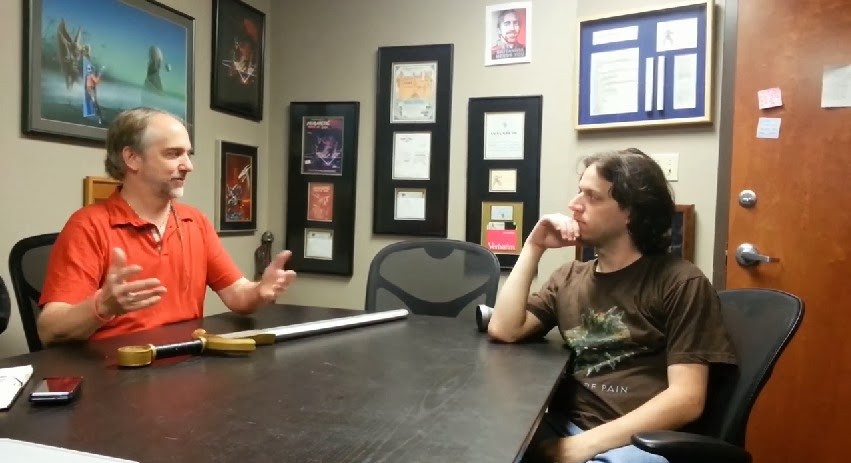
And, in a move that probably made Spoony's dreams come true, he sat down with Spoony for a very special interview and they made some promotional content together. Spoony has always been a big fan and critic of the Ultima Series; check out his incredible Ultima reviews on his website or Spoony VS. The Balrog, and, apparently, Garriot is a fan of the internet's Avatar.

The videos are most intriguing because of their discussions on story-telling in the games, but are even more special than that; can you imagine getting to meet one of your childhood heroes and him asking you for input on how to better do his job?

I can't. But Spoony got to live that dream and more. Check it out.


Monday, September 16, 2013

WORD OF THE DAY! 9/16/13!

textbook [tekst-book]
noun
1. A standard or assigned book used by students for study on a particular subject.
adjective
2. Typical; classic; seemingly typical of an example found in a textbook of a situation.

EX. If you didn't already know, J.K. Rowling admitted that she is working on a new film set in the Harry Potter Universe. The Harry Potter film franchise was an unstoppable juggernaut and it does make sense that Warner Bros. would want more material to merchandise. Furthermore, I can't blame Rowling for wanting to return to the world she created. It is a fantastic world that has inspired millions. Perhaps no fantasy franchise has taken such a hold of a popular culture since George Lucas's Star Wars (yes, technically it is fantasy). Yet, rather than getting a sequel, prequel, or a retread of similar tropes, this won't be the most obvious sort of follow-up to the chronicles of the Boy Who Lived.

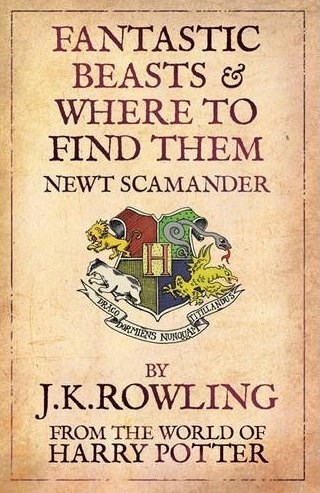
The new film is based on J.K. Rowling's rather slim children's book for charity, Fantastic Beasts & Where to the Find Them, based on the textbook of the same name from the original Harry Potter series. There is some potential in a book that follows some fantastic adventure, presumably Newt Scamander, as he documents creatures in the wild. Or perhaps it is something completely different and completely awesome. We'll just have to see what Rowling's magic can produce.

Friday, June 14, 2013

WORD OF THE DAY! 6/14/13!

"Murder your darlings"
idiom
1. The popular writer's addage coined by Sir Arthur Quiller-Couch, in his published series of lectures from Cambridge, On the Art of writing, that summarizes the held-fast advice that authors must be willing to kill their characters, even if they don't want to and they know the audience will have a negative reaction, because the narrative can become stronger through the resulting drama and intrigue.

EX. The first story I wrote for a college workshop was not very good. In fact, to be perfectly honest, I still don't think I've written a story that I would put in the "good" category. A couple of my stories are satisfactory, but, back the to the subject at hand, my first story was not even satisfactory. And yet, I believe I learned something from the experience.

I don't wish to give too much away in case I wind up reworking the flaccid bit of drama and commentary that I called "Little Things", but here is a synopsis. An old man, named David, and his wife go on a trip to Florida. Despite his wife's objections, David insists on going out to golf despite the warnings of violent storms on the way. He ignores all precautions and warning signs, until it was too late. David is with lightning and dies shortly after. I took a whole page to describe all of the moment in a heart-beat. I murdered David.

Not only did I murder him. I murdered him callously. I murdered him to show the readers the error in his ways. I don't regret murdering David. I regret murdering him to prove a point. I don't think you forget the first character that you murder. And that's okay. I regret how I went about it and I regret that David was difficult to like, but I don't regret murdering him. After I murdered David, I knew I could murder other characters I created (and that's sorta like murdering yourself...so spooky, right?).

A lot of people say they've quit Game of Thrones after George Martin murdered some more of his darlings. I know that he had his reasons for doing it and he didn't just do it to prove a point/for shock value. He did it for a variety of reasons that, I believe, will prove to pay off. And that's why I keep watching and that's why I keep reading.

Maybe next season I'll be caught up in reading the books and maybe you should too. I'd trust the guy that helped invent wookiees. Feel free to read some of his own writing tips.

Thursday, April 4, 2013

WORD OF THE DAY! 4/4/13!

dysfunctional [dis-fuhngk-shuh-nul]
adjective
1. Not performing normally, as an organ or structure of the body; malfunctioning.
2. Having a malfunctioning part or element.
3. Behaving or acting outside social norms.
 
 
EX. I think it would be very difficult to find a family unit more dysfunctional in Westeros than the Lannisters-- considering the fact that the family "dog" is a horribly scarred bodyguard who cuts men down with ease (I think he's hiding some where in the background...).

Tuesday, April 2, 2013

WORD OF THE DAY! 4/2/13!

thaumaturge [thaw-muh-turj]
noun
1. A magician or a worker of miracles.

EX. It is difficult to be a hero in a fantasy world without killing literally thousands of creatures that were just in the wrong place at the wrong time and trying to defend their wrong home from the wrong invader (you're the invader). Remember, every time that your lowly thaumaturge shoots a kobold in the face with a magic missile after invading a temple-- a temple that may have been their home for dozens of generations-- that you were the one who decided to go dungeon diving. Those kobolds probably had a culture and, by killing them all and destroying their home by taking trinkets, you probably left little for future dungeoneering anthropologists to discover. You didn't just kill the kobold. You killed the idea of them. When you die, most likely, your memory of them will be lost alongside those of every other creature you killed that was just trying to mind its own business until you killed it to root around in its burrow. But, hey, they're being total dicks, right?

Friday, February 1, 2013

WORD OF THE DAY! 2/1/13.

enchiridion [en-kahy-rid-ee-yun]
noun
1. A handbook or manual.

EX. If you're a fan of Adventue Time, you know that the Enchiridion is an important artifact in the Land of Ooo that are hero, Finn, became the entrusted owner and defender of in one of the first episodes of the series. PREVIEW

The book appeared to be a magical and ancient text with lots of useful advice and lessons for a young hero to learn (Ex. Like "Chapter 5: How to Kiss a Princess"). Not to reveal or SPOIL too much, because the show's recent season took us on a dark journey to discover many of the secrets and past tragedies that led to the post-apocalyptic fantasy Land of Ooo's situation-- yes, in case you were unaware, this setting is post-apocalyptic. In fact, there is mention of their being "Mushroom Wars" which, almost certainly, refer to an all out nuclear war that, much like the premise of the classic animated film, Ralph Bakshi's brilliant WIZARDS (you can watch the whole thing by starting with Part 1/8 linked to the left of this parentheses).

Also, on that note, there are a lot of things in common between these two worlds. Wizards inspired many a post-apocalyptic fantasy setting where modern technology is impressive magic to fantasy races (think how impressive a film camera or tank would be to Bilbo Baggins?). But anywho, if there is anything to be talked about here in this sloppy rant, besides how you should watch Wizards, is that a post-apocalyptic world is great for Dungeons and Dragons (which Adventure Time is very much inspired by and inspires).

In fact, as D & D is a game where they recommend borrowing story elements and world elements, Adventure Time is a pretty interesting place to borrow ideas for a fantasy setting. Heck, the first adventure I ran in my Korbo the Barbarian campaign borrowed hijinks from the Legend of Zelda, Korgoth the Barbarian (duh), Heavy Metal, and, of course, the Enchiridion episode of Adventure Time since the first adventure included a magical book, a keymaster and a minotaur. Stay tuned for future rants about stuff and, perhaps, more adventures of Korbo.

Basically, this was mind dump to get my wheels rolling for some future content. Sorry if it can be that way sometimes, but I do this for entertainment-- yours and mine.